Cycle of Support:
By Reese
The Olympics have always been one of my favorite times of year. Every four years in June, I stream, watch, and read everything that has to do with the Olympics. From the athletes’ background stories, to who’s winning in what sports. I watch everything. Olympians inspire me, not just as an athlete, but also as a person. This inspiration got me wondering: there are 1,000’s of kids every day being inspired by athletes, but what do these people or athletes get in return?
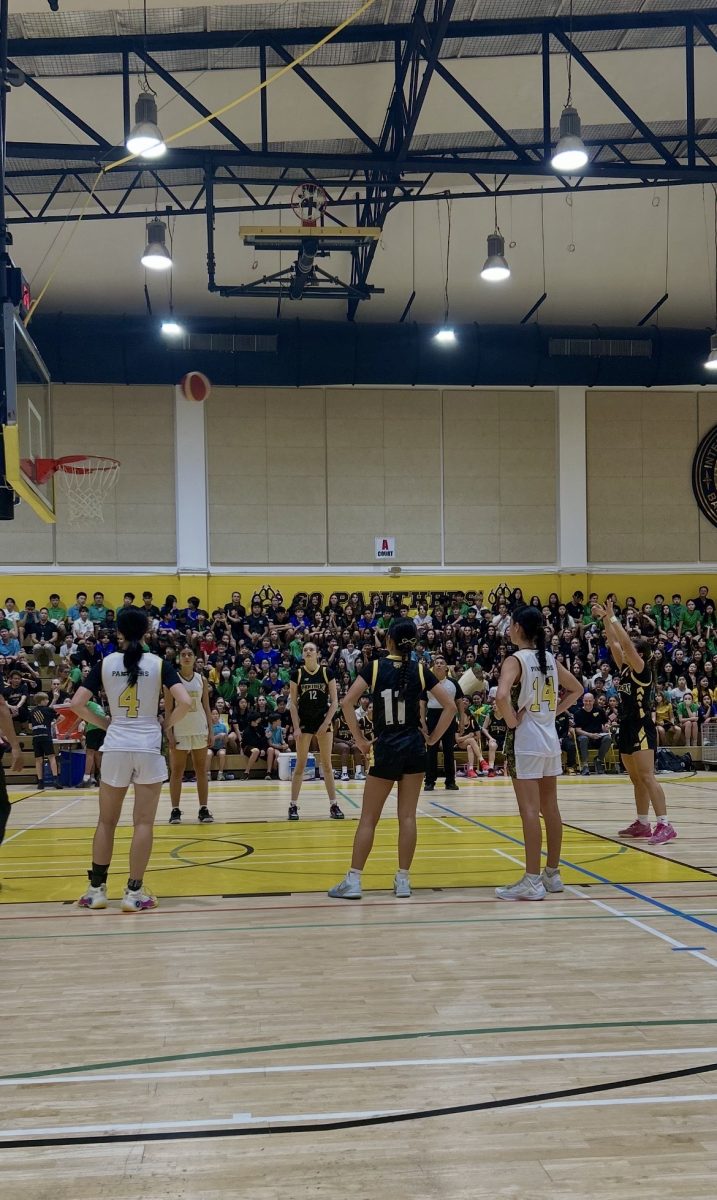
This question of what athletes receive in return for their inspiration became much clearer to me a couple of weeks ago, when ISB hosted the 2026 basketball and tennis IASAS. Because ISB was hosting, I was able to go to almost all of the games, and what I witnessed offered a powerful answer to my question about the reciprocal nature of inspiration and support. One game in particular that really stood out to me was the ISB vs ISKL girls’ basketball game. The girls’ basketball games often aren’t as well attended as the boys’ games, and this game seemed to be going the same way. That was until the younger grades came in.
It’s not everyday Middle School and Elementary School students get to skip class to watch basketball; you could tell they were excited. Their energy was infectious. They waved, screamed, and hyped up every player on the ISB team. You could see the players’ attitudes begin to change. Their sprints became a little faster; they started shooting more shots, and they began to really enjoy playing the game. You could also see the Elementary and Middle school students (girls in particular) begin to watch the ISB girls play in awe, following everyone’s moves and shots with laser focus. Every young girl I saw in the stands was inspired by the girls on the court, and you could tell just by the look of awe and admiration on their faces.
Before the game, I didn’t think much of how the students in the stands affected the game of the players or vice versa. Now, I see the two definitely coincide. The kids in the stands are inspired by the girls on the court, and the girls on the court are supported and uplifted by the kids in the stands. The same thing goes for the Olympics. The athletes are cheered on and encouraged by the fans, and the fans are inspired by the athletes. This is the cycle of support offered through sports, and from the Olympic village to the ISB courts, the ‘return’ is simple but profound: we give them a reason to play, and they give us a reason to believe.
Coaching Behind the Scenes
By Lin
When you first think about IASAS, you’d most likely picture the constant buzz of the scoreboards, adjudicators typing on their laptops and looking intimidating, and the high-stakes Varsity basketball players or debaters competing for gold. It is a week determined by confidence, celebrations of athleticism, and school pride. However, if you stop looking at the delegates for just a second and look at the sidelines, you can see the coaches holding it together. They seem to take on all the stress behind the scenes so that the team doesn’t have to, ensuring that the heavy weight of the event never breaks the delegate’s resolve.
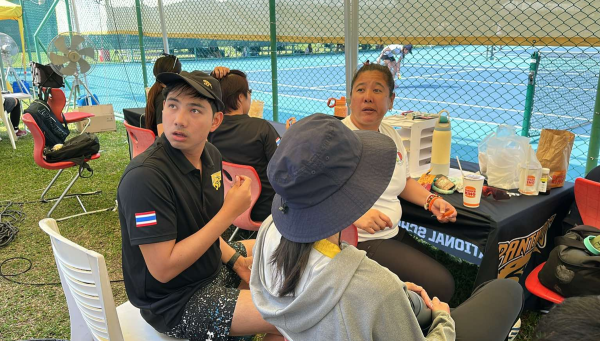
During the season 2 athletics IASAS when Tennis was hosted at ISB, I once saw a tennis player cry because she lost a super intense match. Did the coach yell at her? No! She pulled her aside, wiped her tears, and spoke to the player gently without giving a care to the students buying food in the breezeway.
Then, the coach said something that made her take a deep breath and get back in the game. Coaches don’t just focus on the strategy of the game, but they run around recording everything…Literally. I saw coaches filling up water bottles, carrying sweaty towels, running around the whiteboards to record the scores, and leaning in while watching the games. They seem to take on all the stress, so the team doesn’t have to.
We talk a lot about “IASAS Spirit,” and sometimes it sounds really cheesy, but seeing that support makes it feel serious. The coaches are the ones who make sure that, win or lose, nobody walks off that court feeling horrible. That quiet support is probably the most important part of the whole week.
The backbone of our competition
By Liam G.
It’s game day, spirits are high, the players are ready, and the competition begins. To most of us, the event starts with the first whistle. But before the first whistle, and long after the last whistle is even blown, someone else is working to make the event possible.
At every event our school hosts or attends, such as BMAC and IASAS or even the exchange, the spotlight almost always lands on our players and coaches.. They train for weeks, sacrificing weekends, grades, and sometimes even their mental health to carry the weight of expectation.
However, behind these athletes we are proud of, there are other important members of our ISB family, a team working just as hard that most people never see.
Whether it be;
- The athletics staff who coordinate the events
- The setup crew who arrive early
- The security staff
- The B&G staff who ensure our walkways and fields are prepared
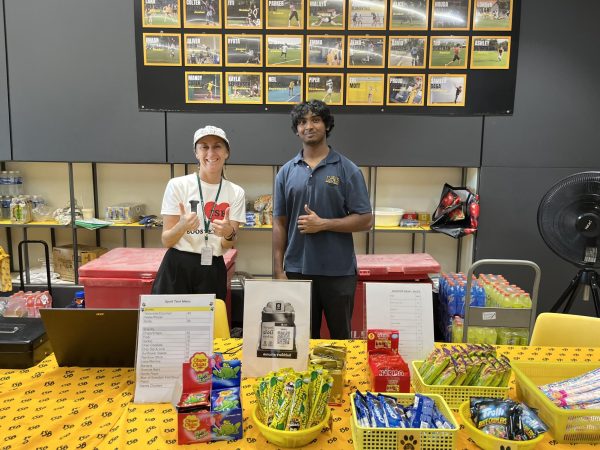
- The people who come out early to serve their delicious food
- And the boosters, who work closely with all the other groups
Without them, we are weak.
I got first-hand experience from the perspective of these supporters when I applied to volunteer at a BMAC event, hosted by ISB. Instead of being a spectator on the field, I was behind the scenes, serving and restocking snacks and drinks through our Booster Hut. This experience gave me an appreciation of how hard it is to successfully plan and support an event. Everyone needs to play their part.
We should not only celebrate a hard-earned victory from our hard-working teams, but also look beyond that scoreboard for a moment. Notice the staff packing away equipment, cleaning the fields, and the amazing people who set up stalls to satisfy our hunger and quench our thirst.
In a school like ours, where these sports seasons form our heritage as a school, the backbone, people who make these events even become possible, the role isn’t minor, but rather foundational.
More Than a Timeout: The Coaches Behind IASAS Success
By KhaoPhoon
In IASAS sports, coaches are often the quiet force behind the noise of the crowd and the intensity of competition. While scorelines and trophies may define seasons on paper, it is coaches who shape the experience that truly lasts. They are teachers, strategists, and mentors, guiding athletes through pressure, setbacks, and moments of self-doubt. Beyond drills and tactics, IASAS coaches help students build discipline, resilience, teamwork, and confidence, ensuring that sport becomes an extension of education rather than just a competition.
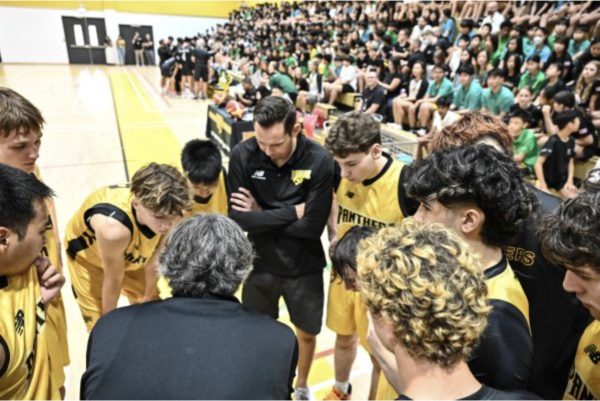
ISB’s IASAS boys basketball team is getting advice from their coaches
This image captures that role perfectly. In the middle of a packed gym, with hundreds of students watching from the stands, a coach stands at the center of a tight huddle. The players lean in, focused and unified, blocking out the noise around them. This moment isn’t about a single play; it’s about trust. It shows how coaches act as anchors in high-pressure environments, bringing clarity and calm when emotions are high. The team’s body language reflects respect and belief, highlighting the bond that coaches build with their athletes over an entire season.
In IASAS, where schools from across South Asia come together and compete at a high level, this relationship is especially significant. Coaches are not only preparing teams to win games but also to represent their schools with integrity and pride. This image symbolizes the heart of IASAS sports: a shared commitment to growth, leadership, and community, led by coaches who shape athletes long after the final whistle blows.