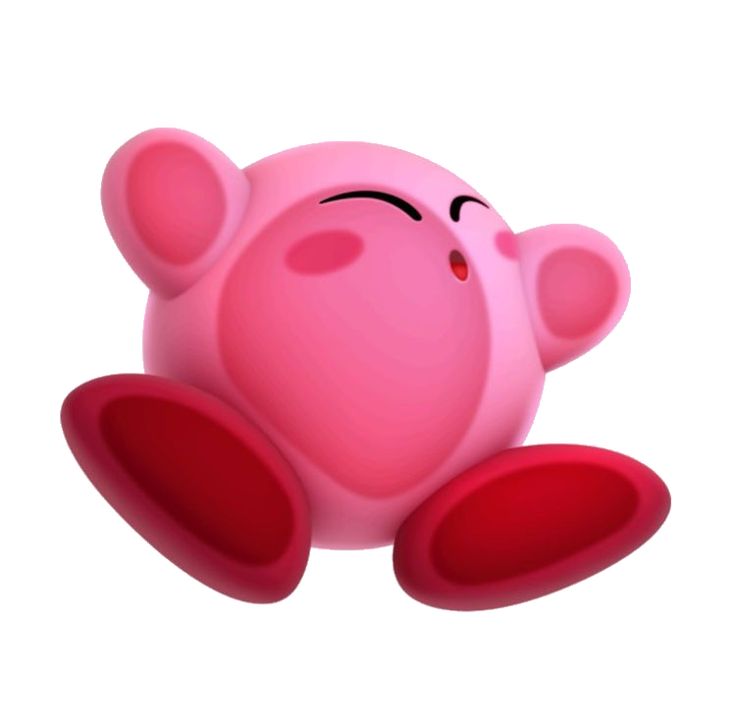

Kirby, the character created by Masuhiro Sakurai (who also developed the Super Smash Bros series), is the protagonist of the long-running Kirby video game series. His debut game was Kirby’s Dream Land, released for the Game Boy in 1992. How does an 8-inch pink puffball who devours sinister creatures manage to become one of the most beloved characters in gaming and even beyond? It’s the design science behind the sparkly eyes.
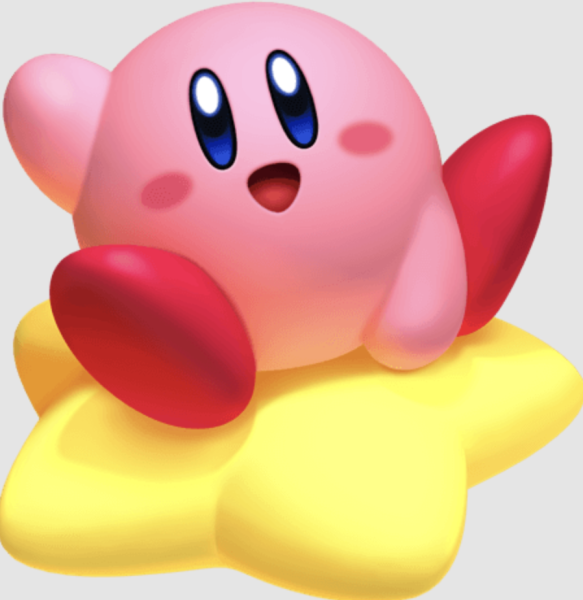
First, let’s dive into Kirby’s look. A spherical body with short and plump limbs, elastic skin, large eyes, and a small mouth. All of his traits fit in the concept, “Kindchenschema”, which is German for “Baby scheme”, first introduced by animal behavioral scientist. According to Lorenz, ‘Kindchenschema’ are infantile physical traits that trigger innate caregiving and nurturing responses in humans, which promotes offspring survival. These features are naturally perceived as “cute” in infants, animals, and even objects, activating our reward system and protective behavior. This concept matters because it’s an adaptive mechanism to ensure vulnerable infants and animals receive care, driving positive reactions.
Kirby’s round body plays an important role in the science of his cuteness. In 1929, Wolfgang Kohler conducted a quintessential experiment called the “Kiki/Boba” phenomenon. The experiment was later recreated more comprehensively by V.S. Ramachandran and Edward Hubbard in 2001. Both of the experiments asked the same question “Which of these shapes is Boba and which is Kiki?” 95% of participants paired Boba with the softer and rounded shape and the sharper cornered shape with Kiki. The central observation was that the subjects connected rounded imagery with more rounded auditory sounds and sharper imagery with sharper auditory sounds. This also extends to personality traits that people see in specific shapes. Round shapes are considered as friendly and nice and sharp forms are seen as serious and rigid. Linking this back to Kirby, his physical traits match the ones mentioned in Kindchenschema, evoking positive reactions from people and strengthening his appeal. Though his name starts with a K, the phonetics of his name is softened by the “ir” and “ee” sound at the end. This further creates a rounded auditory and a more “Boba” sound.
Not only does Kirby’s shape charm people but also his color. Color psychology, created by Johann Wolfgang von Goethe in 1810, is the study of how colors affect human behavior, perception, and mood. This is applied in areas such as branding, interior design, marketing, and definitely in the design of Kirby. Psychology Today mentioned that county jails in the US began using pink cells to pacify aggressive prisoners, observing how violent felons and angry alcoholics became calm after being exposed to the color pink. This shows that the color psychology of Pink centers on love, compassion, and serenity. Sakurai chose pink as Kirby’s color because he wanted to ensure that the players would approach Kirby with senses of protectiveness, which is a powerful psychological foundation for a long-standing mascot.
Next is the sound, particularly of his iconic “Poyo!” is a perfect example of auditory neoteny. Neoteny is the retention of juvenile physical and behavioral traits into adulthood, auditory neoteny is the application of this concept to sound. It shows how certain vocalizations, especially high-pitched sounds, are instantly recognized by people as belonging to infants, children, or small non-threatening creatures. This connects to the Baby Scheme as our brains are evolutionarily wired to consider high-pitched sounds as signals of small size and vulnerability. Conversely, deep, low-pitched sounds signal large size, maturity, and potential threat. Kirby’s “Poyo” is his iconic non-verbal exclamation that conveys excitement or effort without conveying complex thoughts or intent. This simplicity further reinforces his eternal child-like innocence.
The psychological mastery of Kirby’s cuteness and appeal does not end with his visual design, the adorable threat paradox. Kirby is one of the most powerful characters in Nintendo, yet he is never scary. While inhaling and consuming enemies are his primary mechanic, his pink hue and physical traits serve as emotional counterweights. This contrast between Kirby’s gentle look and his destructive powers make him more compelling.
Overall, it’s confirmed that Kirby is no accidental icon; he is a masterpiece of psychological engineering. His spherical shape is the perfect manifestation of Kindchenschema, which sets off our deepest protective instincts, while pink -the color of serenity and compassion- pacifies the destructive power he lays his hands on. Finally, the simple, high-pitched “Poyo” is the crucial layer of Auditory Neoteny, confirming to our ears that he is innocent, childlike. By targeting both our visual and auditory senses simultaneously with these hardwired cues, the design succeeds in creating a multi-sensory signal of absolute purity, ensuring Kirby’s universal enduring scientifically irresistible charm.
Do you love Kirby? Comment down below to share your love for Kirby!